Copper Price Trends: How Rising Material Costs Impact Australian Electrical Quotes
Rising copper prices are driving a surge in Australian electrical and plumbing rough-in costs. Learn how to manage your construction loan budget and prepare for price hikes.

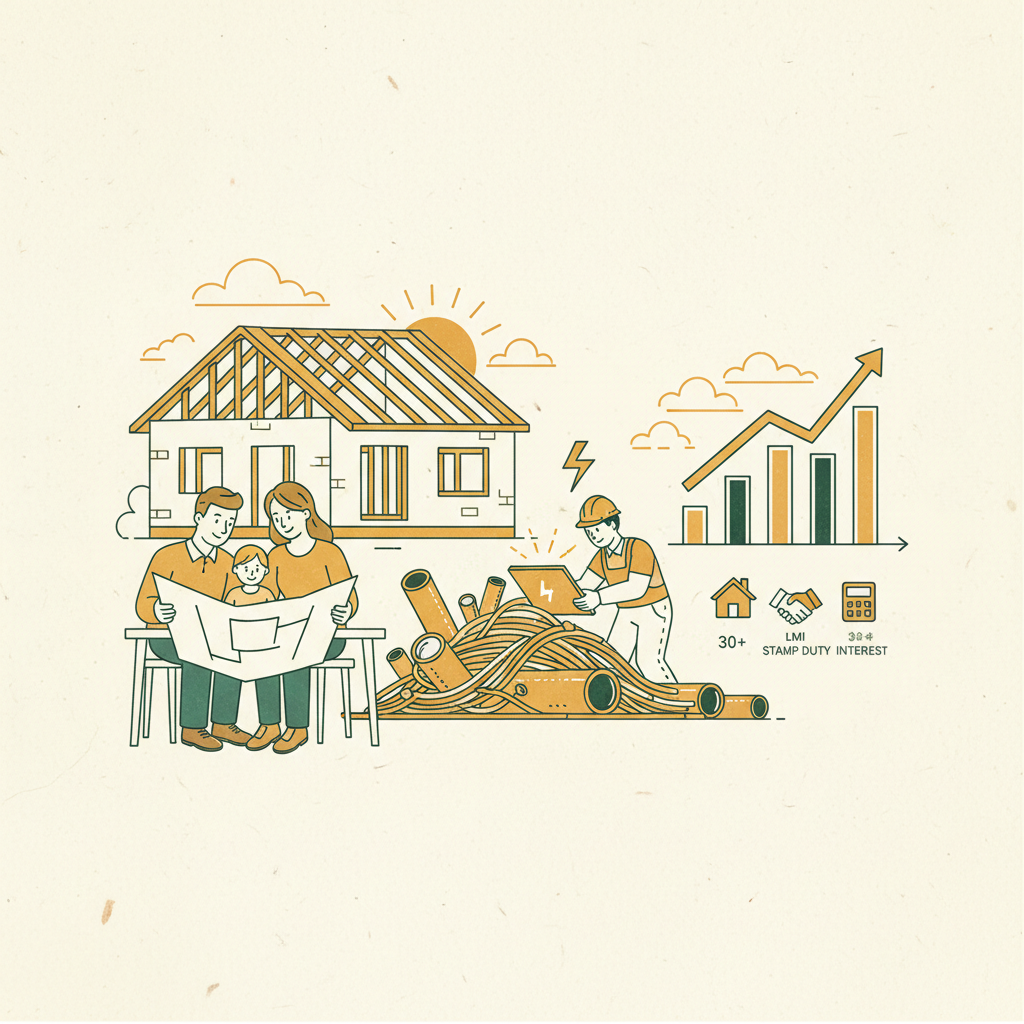
TL;DR: Volatility in global copper markets has led to a noticeable increase in Australian electrical and plumbing rough-in costs. Homebuilders should prepare for potential house wiring cost increases of 15% to 25% over the next 18 months, making it essential to review construction loan contingencies and progress drawdown schedules early in the piece.
Key Takeaways
- Market Volatility: Copper prices have recently tested record highs on the London Metal Exchange (LME), driven by global demand for renewable energy and EVs.
- Electrical Estimates: The average electrical rough in cost in Australia for a standard 4-bedroom home currently ranges from $11,000 to $14,000, with forecasts suggesting further upward pressure.
- Plumbing Trends: Plumbing rough in cost per m2 currently sits between $90 and $120, though high copper pipe and component pricing are forcing many builders to reconsider material choices.
- Budget Buffers: Financial experts recommend a 10% to 15% contingency fund in construction loans to absorb mid-stage material price spikes.
- Finance Strategy: Lenders may require an updated “cost-to-complete” assessment if initial quotes expire before the rough-in stage begins.
Why is the price of copper impacting Australian building costs?
Copper is a primary industrial metal used for electrical wiring and plumbing because it conducts electricity and heat more efficiently than almost any other material. Recent price fluctuations are the result of a tightening global supply hitting just as demand for “green” infrastructure—which relies heavily on copper—is accelerating.
According to recent London Metal Exchange (LME) data, copper has consistently traded at elevated levels compared to historical averages. This global pricing flows directly to Australian wholesalers. Because the electrical rough-in happens months after a building contract is signed, many builders with “cost-plus” or “variation-allowed” clauses may issue price adjustments when it comes time to purchase the materials.
An electrical rough-in is the construction phase where cables are pulled through the wall studs and ceiling cavities before the gyprock is installed. If your contract isn’t strictly fixed-price, or if it contains specific “rise and fall” clauses for materials, these market shifts can impact your bottom line.
How much does an electrical rough-in cost in Australia?
Currently, you can expect to pay between $11,000 and $14,000 for a standard 4-bedroom electrical rough-in. However, industry forecasts suggest that if copper supply remains tight, these costs could rise toward the $16,000 mark by 2025-2026.
For a custom architectural build with smart home features, these costs often exceed $25,000. Higher material costs mean larger progress drawdowns from your loan, which in turn increases the interest-only payments you make while the house is under construction.
| Component | Current Average Cost (AUD) | Projected 2025/26 Cost (AUD) | Estimated Increase |
|---|---|---|---|
| Standard 4-Bed Electrical Rough-In | $12,500 | $15,500 | 24% |
| Smart Home Wiring (Data/Cat6) | $4,500 | $5,400 | 20% |
| Plumbing Rough-In (2.5 Bath) | $9,500 | $11,800 | 24% |
| EV Charger Pre-wiring | $900 | $1,200 | 33% |
Check the RooLoans Interest During Build Calculator to see how a potential variation in your rough-in costs changes your monthly payments during the construction phase.
What is the current plumbing rough-in cost per m2?
In the current market, the plumbing rough in cost per m2 in Australia averages between $90 and $120. While many builders have switched to PEX (cross-linked polyethylene) piping for water lines to mitigate costs, copper remains the standard for gas lines and high-pressure hot water connections.
The Master Plumbers Australia (MPA) industry insights suggest that copper components like valves and manifolds are particularly sensitive to global metal prices. If your total build cost increases due to these materials, your Loan-to-Value Ratio (LVR) might shift. If your LVR climbs above 80%, you may become liable for Lenders Mortgage Insurance (LMI), even if you weren’t at the start of the project.
How does the building material price forecast affect your loan?
The building material price forecast for the coming years shows that while some materials like timber have stabilised, metals like copper and aluminium are expected to remain volatile. The Housing Industry Association (HIA) notes that while overall inflation is cooling, specific trade-related materials are still subject to global supply chain pressures.
Fixed-price contracts are becoming more complex as a result. Lenders are looking much closer at “Prime Cost” (PC) items and “Provisional Sums” (PS) during the valuation process. A Provisional Sum is an estimate for work where the final cost cannot be determined at the time of signing—often used for things like electrical and plumbing when material prices are unstable.
If your builder issues a variation for copper increases, you may need to provide extra capital if the bank’s valuation does not increase in line with the costs. This is why keeping a 10% contingency fund is now considered standard practice for Australian homebuilders.
How can RooLoans help you manage rising build costs?
Managing material price volatility requires a loan that can flex when your builder hands you a variation. The RooLoans platform lets you compare 30+ Australian lenders to find those with the most favourable terms for progress payments and variations.
Our comparison tool helps you filter for banks that allow higher LVR limits or those that offer more streamlined processes for approving loan increases mid-build.
Before you agree to a new electrical quote, Compare Lenders Free to see if your finance structure is robust enough to handle current market trends.
Frequently Asked Questions
Can I use plastic piping to avoid copper price hikes?
Yes, PEX is a common alternative for water lines that costs significantly less than copper. However, Australian Standards (AS/NZS 3500) still require copper for most gas installations and specific connections within the vicinity of hot water systems.
Does my construction loan cover material price increases?
If you have a “Fixed Price” contract, the builder generally absorbs the cost. However, many modern contracts include “climb clauses” or “rise and fall” provisions for specific materials. If these are triggered, you will need to pay the difference out of pocket or apply for a loan increase.
Why is house wiring becoming more expensive in Australia?
It is a combination of high global metal prices and a shortage of licensed electricians. The demand for copper in renewable energy projects is competing with the residential building sector, while the ABS Labour Price Index shows steady growth in trade labour rates.
Will copper prices go down soon?
While market prices fluctuate, the Reserve Bank of Australia (RBA) and global analysts suggest that long-term demand for copper will remain high due to the global energy transition. It is unlikely that prices will return to pre-2020 levels in the near future.
Disclaimer: The information provided in this article is for general informational purposes only and does not constitute financial advice. Figures cited are based on current market trends and industry forecasts. Always consult with a qualified mortgage broker or financial advisor before making decisions regarding construction finance.
Need help choosing a construction lender?
A specialist broker compares 30+ lenders and finds the best rate for your build — free of charge.
Phone verified via WhatsApp · No credit check · Free
Related guides
From our network
Build Cost Calculator
Estimate the cost of building a custom home — by suburb, size, and finish.
How Much Does It Cost to Build a House?
Complete 2026 guide to Australian building costs — by state, size, and quality.
Building Costs Per Square Metre
What does it cost per sqm to build in Australia? 2026 data by state.